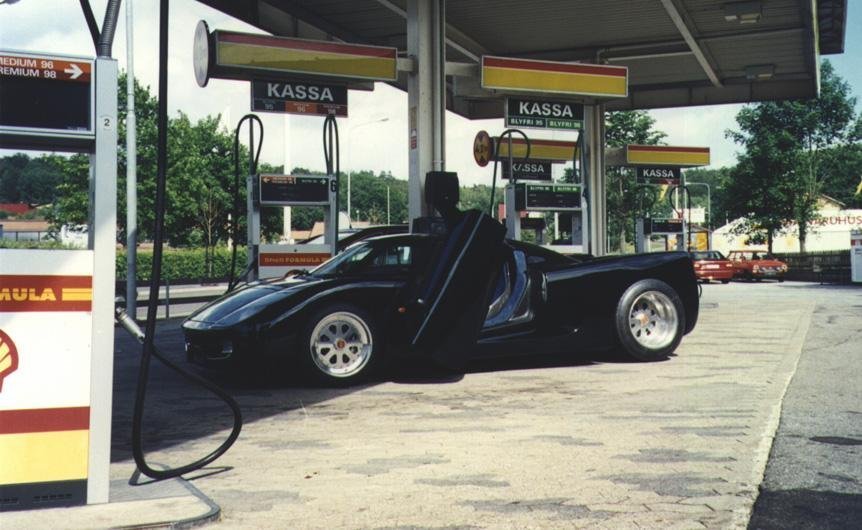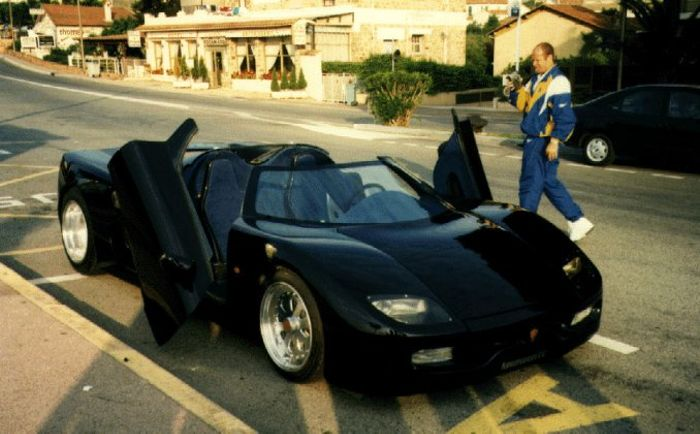
CC-Prototype XP002
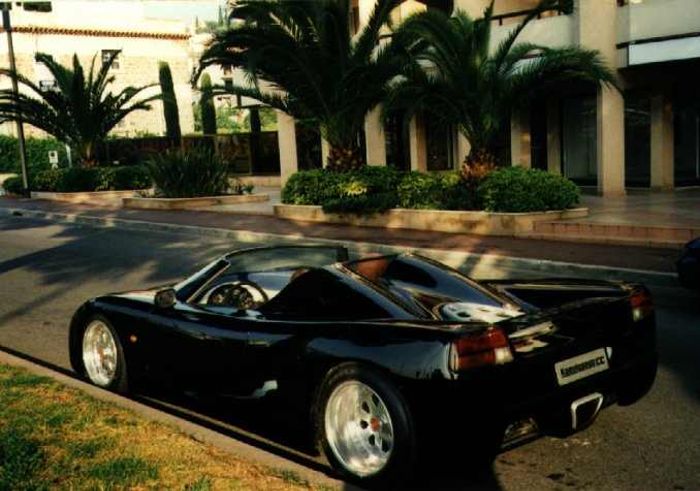
In 1997, the third Koenigsegg® CC prototype XP002 was developed. With help from Dag Bölenius, who fed in the data from his virtual software programme, the chassis and component designs were improved.
The body was also now slightly more streamlined than before thanks to headlight covers and a more raked windscreen. Build quality remained mediocre as the car was still being focused on the technical aspects and the car would remain unfinished. The Audi® engine was carried over from the first prototype and the vehicle would undergo testing again. The car now had a carbon fibre monocoque which Christian have had it made by a British company with Autoclave experts. This kept the weight down and the car had lost several kilos of weight compared with the old steel tubular frame chassis monocoque.
And the car had party trick up it’s sleeves - Dihedral synchro-helix Actuation doors. This would go on becoming another signature for all Koenigsegg® cars to follow in the future. These doors swivel outside and rotate forwards at the same time. The idea behind the dihedrals doors was that in a tight perpendicular parking space, it would be difficult to open the doors without hitting other cars as the car was low and wide which made the doors themselves very wide. To negate this, the dihedral doors were created and also gave a signature look towards the car.
The mechanism used a swing arm on a geared pivot and a hydraulic actuator which would apply pressure to release open the door. However, as this was the first execution of the mechanism, the doors couldn’t swiveled by 90 degrees due to the mounting of the hinges and it was a two step process meaning the doors had to pushed out first and then swivel forward which Christian demised this idea of a 2 step process. While this still created a lot of room for ingress and egress, Christian knew it could be something he could perfect it in the production version.