
The plan:
The plan I had to build cars was pretty much the opposite of what people usually think is a smart business idea. Nobody was asking for it. It was seemingly impossible. It was expensive. Nobody had ever come from nothing and done it successfully before. So it was a stupid business idea, basically. An impossible plan. And that’s why I liked it. I wanted to prove to myself and everyone else that anything is possible if you put your mind, heart and soul into it. I really believed that and still do.”
Christian von Koenigsegg
Now that the design was finalised and the engine in hand, Christian needed someone to fabricate a full size body shell and the actual prototype. He looked up advertisement agency and after quite some search, he found just the person for the job - Svenharry Åkesson, a fabricator in the heart of Stockholm who according to Christian had all the necessary qualifications to help him build his dream car.
Svenharry Åkesson had been building Formula 3 cars since the 1960s for his clients and had gained a reputation for building smaller series of open seat racecars. From there he moved on to making a successful fire suppression system in use of automobiles which he sells that idea to focus on cars again. He designed a Mercedes C111® like sports car on the chassis of a Volkswagen Beetle® called the Silver Hawk for his son and showcased it on a kitcar show where it gain a lot of popularity and a demand for purchase of it is generated. Around 225 of the Silver Hawks are sold before Svenharry sells the company to a Finnish company. With the money he now has, he establishes a new company called Sethera. Originally meant to use the Volkswagen® architecture but later moves on to use Ford® parts. He created the Falcon Mk1 which does well in Netherlands.
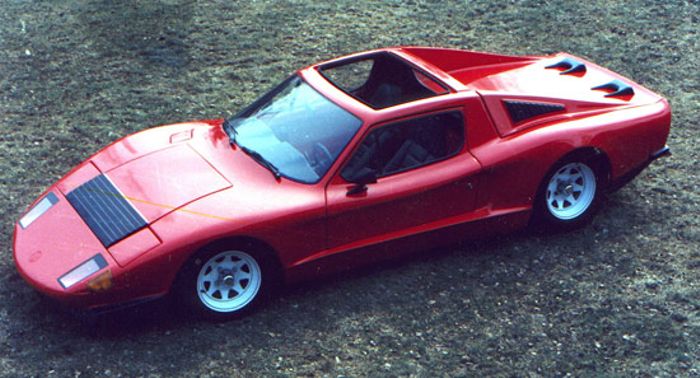
Åkesson gets a phone call from the advertising agency about a Beer company called Falcon looking for a unique design to be built as a ‘show-stopper’ and the design had to be spectacular to be an attention grabber. Svenharry decided to take this project up as a challenge. The agency and sponsors would fund all the materials, but Svenharry’s skills and time would be provided free on the basis that the car would become his after one year. However, after much work and injection of Svenharry’s own money, no funds had been received from the sponsors and the project stagnated as the Falcon brand was loosing money after the ban on Class IIB beers in 1977 and had been struggling since 1985 before it was sold to Carlsberg® in 1996.
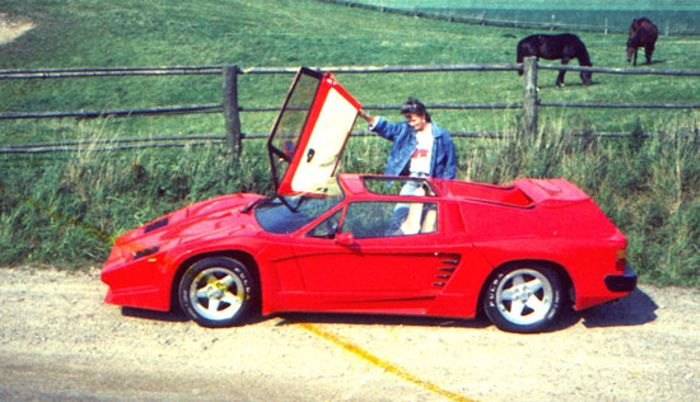
Early in 1995, Svenharry was contacted by Christian von Koenigsegg who had found his designs on the Internet and this resulted in a request that he design a special car for Christian. He came to his office and workshop where he saw the Sethera Falcon (after the Falcon brewery) and having contacted Christian’s father, it was quickly decided that they would fund the development and completion of that car which was to become the prototype Koenigsegg CC.
Christian realised the money was not enough to build an actual prototype. So he turned to a business partner Mikael for some more funds. Mikael agreed to fund Koenigsegg’s prototype but the funds weren’t enough to complete the project. At the time in 1995, there was a lot of IT boom in Sweden which bought in a lot of money to the nation. Christian decided that it would be a wiser option to approach the Swedish Board for National Technical Development and ask for a loan. There, Christian and Mikael met a lady, who at the time was in her 50s which to Christian didn’t really seem the automotive enthusiastic type. Nonetheless, they proceeded and asked her whether the board could help finance this crazy idea for a Swedish supercar company and to their surprise, she liked the car and asked, “How much do you need?”
A sum of 1.5 million crowns ($150,000 back in 1995) was granted for the development of the first prototype. However, they were given a condition to build the prototype - move to an area with high unemployment but regardless of where they’d move, they’d still be granted a space of 1500 sqm on rent. So they could go north, way north, above the arctic circle, or they could go to south-east Sweden, to a place called Olofström on the coast. It also meant Volvo® had a presence there in that region as well which could be potentially useful to them for resources and labour so that’s where Koenigsegg decided to move.
